
Enhanced Deduction for Seniors: What to Know and Who Qualifies
Tax season gets a new over-65 discount.
Article published: March 04, 2026
Make the Most of Tax Opportunities
An Edelman Financial Engines advisor can integrate tax strategies into your financial plan and help you take advantage of new opportunities as laws evolve.
Getting older can have its perks: a bit more wisdom and experience, a bit less keeping up with work, trends and the Joneses. And sometimes, it means you can snag a special deal just for seniors.
The latest entry to the senior discount menu: a new federal tax deduction for people age 65 and over.
WHAT IS THE ENHANCED DEDUCTION FOR SENIORS?
As a result of the One Big Beautiful Bill Act, seniors age 65 and older can claim a new senior deduction during tax years 2025-2028. (Yes, that means it’s available when you file this spring.)
The deduction is in addition to the existing standard and itemized deductions and is worth up to $6,000 per person (so if you and your spouse are both 65 or older, you can deduct up to $12,000 with the new senior deduction).
WHO IS ELIGIBLE FOR THE ENHANCED SENIOR TAX DEDUCTION?
AGE REQUIREMENTS
Anyone who’s 65 or older on Dec. 31 of the tax year can be eligible if they’re within the income limits and aren’t married filing separately.
INCOME LIMITS AND PHASEOUTS
If your modified adjusted gross income is $75,000 or more ($150,000 or more for a couple who are married filing jointly), you’ll see the value of the deduction start to phase out. If your MAGI is $175,000 or more ($250,000 for married filing jointly), you’re not eligible for the enhanced senior deduction at all.
(What’s MAGI? It’s usually the same as adjusted gross income. The “modified” means you have to add back some excluded foreign income, which most people don’t have.)
YOU DON’T HAVE TO ITEMIZE TO CLAIM THIS DEDUCTION
As we said, the enhanced senior deduction is in addition to the existing standard deduction and itemized deductions. It doesn’t matter which one you claim – you can add the enhanced senior deduction on top of it if you qualify.
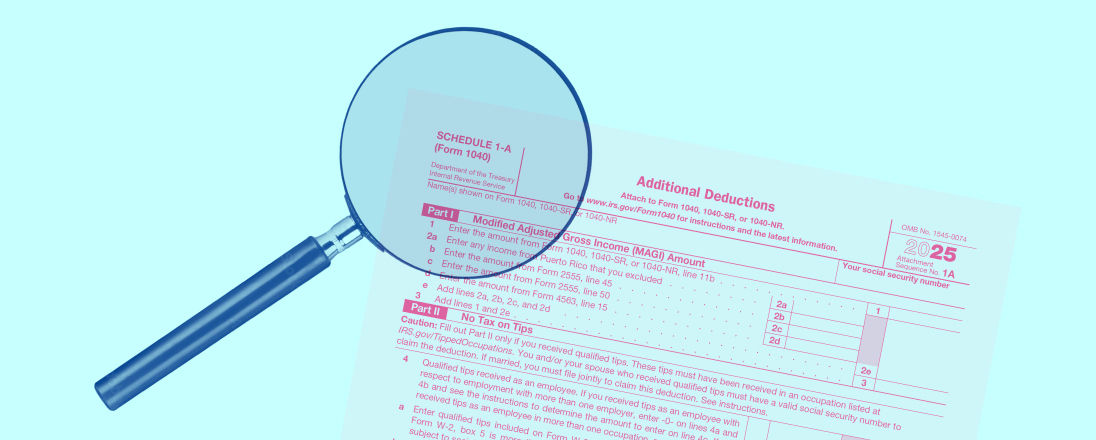
To claim the deduction, you need to include a new IRS form, Schedule 1-A, with your federal tax return.
WHY THIS NEW DEDUCTION MATTERS FOR RETIREMENT PLANNING
LOWER TAXABLE INCOME IN RETIREMENT
Any deduction that lowers your taxable income can reduce your tax, so this deduction is a win for seniors. Reduced tax = more money to support retirement spending.
For example, if you’re on a fixed income or have other cash-flow concerns, the enhanced senior deduction could lead to a higher refund (or smaller check written to Uncle Sam), which leaves more in your bank account.
PLANNING OPPORTUNITY: ROTH IRA CONVERSIONS
Seniors who are strategically converting assets to Roth often do so over several years to avoid recognizing too much income at once and winding up in a higher marginal tax bracket. If you’re in that situation, the new deduction could potentially give you an opportunity to convert more (and offset the additional income with the deduction).
But you have to be careful because the increase in income could wind up reducing your eligibility for the deduction in the first place. And because the income threshold that triggers Medicare surcharges is pre-deduction, you could also inadvertently go over it if you make more of a Roth conversion than planned. Talk to your financial advisor before making any changes to your Roth conversion plan.
WHO THIS DEDUCTION IMPACTS THE MOST
Any senior who qualifies will likely appreciate lowering their taxable income a little bit more. It can be especially helpful if you’re:
- On a fixed income and could use the cash-flow boost
- Doing multi-year tax planning, like spaced-out Roth conversions
If you’re unsure how the deduction fits into your overall financial picture or tax strategies, talk to your tax professional or financial advisor.
COMMON QUESTIONS ABOUT THE ENHANCED DEDUCTION FOR SENIORS OVER 65
Q: “I’m 62 and receiving Social Security. Am I eligible?”
A: No. You must be 65 or older; Social Security status doesn’t affect eligibility.
Q: “I’m 69 but not collecting Social Security. Am I eligible?”
A: Yes, as long as you’re within the income limits and not married filing separately.
Q: “Do I get a partial deduction if I turn 65 late in the year?”
A: No. If you’re 65 by the end of the year, the full deduction applies (subject to the income phaseout).
Q: “Does this deduction replace the existing increased standard deduction for taxpayers age 65 or older?”
A: No. If you qualify for both senior deductions and you take the standard deduction, you can stack all three (for an individual filer, that’s up to $15,750 standard deduction + $2,000 additional senior deduction + $6,000 enhanced senior deduction for a total deduction of $23,750 in 2025).
This material was prepared for educational purposes only. Although the information has been gathered from sources believed to be reliable, we do not guarantee its accuracy or completeness.
Neither Edelman Financial Engines nor its affiliates offer tax or legal advice. Interested parties are strongly encouraged to seek advice from your qualified tax and/or legal professionals to help determine the best options for your particular circumstances.
AM5219407


