

“shiny” Is Not a Strategy, and It Doesn’t Build Long-Term Wealth
What we think about the hype around gold, silver and bitcoin
Article published: February 12, 2026
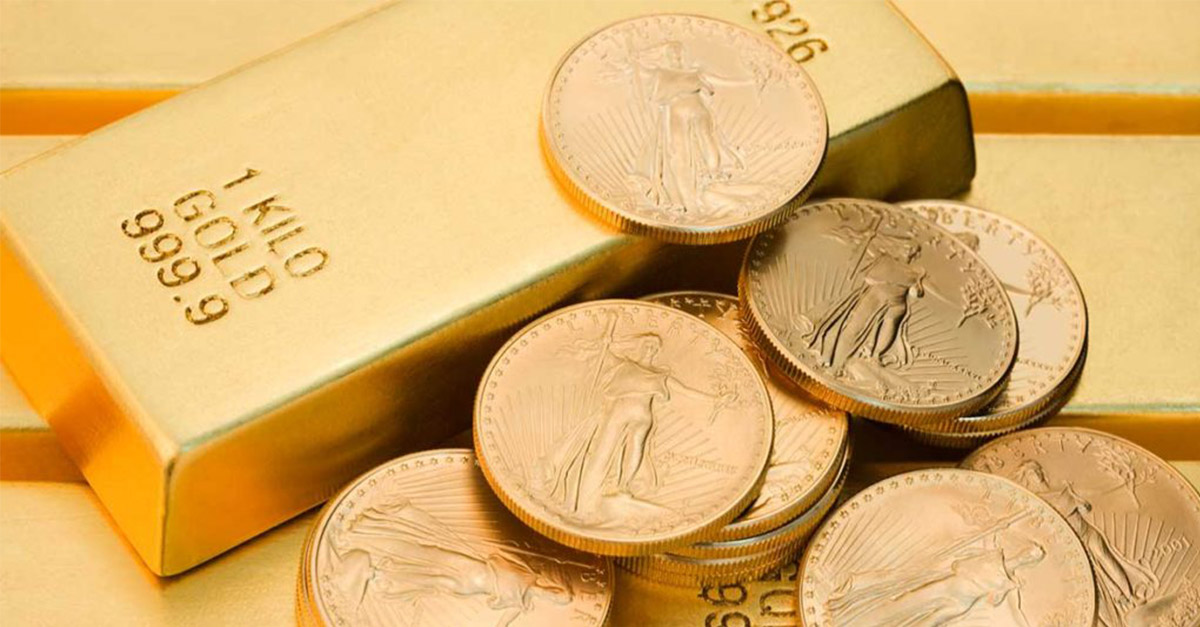
You’ve probably seen the headlines: There’s been some weird stuff going on at the fringes of the markets recently. Gold has been steadily rising for the past year, boosted by geopolitical concerns, and spiking over the last few weeks. Silver suddenly got into the game out of seemingly nowhere.
Then came the plot twist at the end of January. After an eye-popping sprint, precious metals reverse‑engineered a roller coaster, with silver nearly 30% down in a single session and gold logging its biggest one‑day dollar and percentage drop since the early 1980s.
The spark? Among other converging factors, markets suddenly priced in a tougher inflation‑fighter as the next Fed Chair – no use having a shiny “inflation hedge” when there’s minimal inflation.
At roughly the same time, bitcoin, which has seen runaway price increases over the past few years (punctuated by massive slides), shed half its value. (While bitcoin is the largest digital currency and generates the most headlines, others including ethereum have also fallen.)
These spikes and slides make great headlines, but at Edelman Financial Engines we judge every so-called “opportunity” by a simple rule: Does it actually help investors?
So we’ve turned to our investment leaders – Edelman Financial Engines Chief Investment Officer Neil Gilfedder and Chief Investment Strategist Katie Klingensmith – not just to decode the headlines, but to sharpen them through the lens of our core investing principles.
Q: Are gold, silver and bitcoin’s moves all related? Are they similar kinds of investments?
Katie: Yes…and no. Obviously, gold and silver are tangible objects and there’s a finite amount of them in existence, which helps prop up their value. Bitcoin similarly has a known, finite supply, and is often referred to as “digital gold” due to how it can be verified through a digital ledger; still, it’s a relatively new experiment in financial history.
In the investment arena, they have a couple things in common besides being in the news right now. First, they’re speculative – other than a few industrial applications for precious metals, they don’t really have any driver of value other than whatever people are willing to pay for them at that moment. Additionally, they’re often promoted as playing a similar role in a portfolio: inflation hedge – meaning they hold up their value when prices are rising – or safe haven – meaning they gain when the world is topsy-turvy and other investments, like stocks, are falling.
Gold and silver have been spiking because of that “flight to safety” in a world that has gotten a bit chaotic lately. Bitcoin has done the opposite – in fact, some experts think bitcoin investors are abandoning ship and piling into gold, causing both trends. It turns out investors maybe aren’t as convinced of bitcoin’s safety after all.
Q: Let’s talk about gold and silver. What do they actually do for a portfolio?
Neil: First, let’s take a step back and think about the point of investing for most people, which is to purchase assets that will rise in value (at least, that’s the hope).
The reality is that there’s no fundamental reason to expect gold and silver to increase in value – and for long periods of time, they haven’t. And that’s because outside of some very specific industrial uses, there’s nothing underneath their value except people’s belief in what they should cost.
How is that different than stocks and bonds? With stocks and bonds, you own a piece of a company or debt backed by the company (or the government for some bonds). Those companies have revenues and assets that lead to earnings, dividends or interest for their stock and bondholders. Government bonds are considered even safer as an investment because the government has the ability to actually print money if it comes down to it.
On the other hand, in a vacuum, the “expected” real return of precious metals is pretty much zero. There’s just no rational reason for a shiny hunk of metal to be more expensive tomorrow than it is today. (And indeed, there have been 20-year periods where zero is exactly what gold has produced.)
Gold hasn’t lived up to the shine

Sources: LBMA, Morningstar Direct, S&P Dow Jones Indices. February 1975 through February 9, 2026. Stocks represented by S&P 500 Index total return (including dividends); gold represented by LBMA Gold Price PM USD. Indexes are unmanaged portfolios and investors cannot invest directly in an index. Past performance does not guarantee future results.
Q: Some people say gold is a good inflation hedge. What about that?
Katie: In investing, a “hedge” is something you buy because it’s expected to give you positive performance or offset declines when stock markets are falling. In this view, gold and silver may not do much for a portfolio until the chips are down, but then they’re supposed to really shine (no pun intended) during down markets and periods of high inflation.
The truth is that that’s sometimes happened, and sometimes it hasn’t. But, again, think about the point of a hedge. You ultimately want to mitigate losses and try to ensure that some part of your portfolio is beating inflation – in other words, to have the best long-term chance of a healthy return.
And guess what’s historically done that really well? Stocks. Which makes perfect sense logically; companies are able to adjust when the environment changes, including passing along higher prices during periods of inflation.
Q: Are gold and silver as safe as people say?
Katie: Remember that this “safe” investment just had a top-tier bad day! Over the long term, gold may be “safe” in the sense of being less likely to lose nominal value, but if it doesn’t outpace inflation (and it doesn’t always), then it’s really losing money. Let’s go back to Neil’s earlier point about 20-year-long periods without any return. The story gets a whole lot worse when you consider that inflation more than doubled living costs during the same time period that gold was gathering dust.
You lost 87% in purchasing power if you bought gold in 1980 and held onto it the next 40 years

And you still would have an after-inflation loss today!
Source: Bloomberg, based on an initial investment January 18, 1980, as of January 31, 2026. Based on the spot price of gold adjusted by U.S. Urban Consumer Price Index.
Q: I'm worried about the strength of the U.S. dollar. Isn’t gold at least a good hedge for that?
Neil: If you want to protect purchasing power – or how much you can buy with your money, which is what most people really care about when all’s said and done – international stocks can offer both long-term growth potential and a tailwind if the dollar weakens. Just look at what happened in 2025.
When the dollar struggles, international stocks naturally get a boost

Sources: Bloomberg, MSCI, as of December 31, 2025. International stocks represented by MSCI EAFE Index (in USD and local currency). Indexes are unmanaged portfolios and investors cannot invest directly in an index. Past performance does not guarantee future results.
For most people who earn and spend in dollars, that’s a more durable hedge than a commodity with no income stream.
Q: Okay, what about bitcoin? Is it an important part of a diversified portfolio?
Neil: Bitcoin and other digital currencies can be seen as parallel to precious metals in some ways. Like metals, bitcoin doesn’t generate cash flows and is driven largely by sentiment. It can rally hard, then drop just as hard. In fact, it’s lost at least half its value three other times in the past 5 years.
It’s understandable if you felt a bit of FOMO at this point last year – but if you look at the past two years, stocks have kept pace with bitcoin given its recent pullback.
Bitcoin makes headlines, but it may not deserve them

Source: Bloomberg, S&P Dow Jones Indices, as of February 9, 2026. Stocks represented by S&P 500 Index total return. Indexes are unmanaged portfolios and investors cannot invest directly in an index. Past performance does not guarantee future results.
Q: Doesn’t Edelman Financial Engines recommend ignoring volatility?
Katie: Yes, you should expect investments to go up and down, but we only want this when it’s part of a fair trade. The type of volatility that comes along with investing in precious metals or bitcoin is due to their nature: They’re worth what people think they’re worth, and nothing more. You’re not getting predictable, fundamental sources of return in exchange for taking on that risk.
Think of it like this: There’s volatility you’re compensated for and volatility where you’re not. If you’re terrified of roller coasters, you might still go on one if they paid you $1 million, but would you do it for free?
Q: So does Edelman Financial Engines think investors shouldn’t own metals and crypto?
Neil: We don’t believe in directly owning gold and silver as part of a portfolio. We do believe in robustly diversified portfolios, and in fact we have indirect exposure to precious metals and crypto via stocks in companies in these industries.
For example, we have investments in the precious metals industry through ownership of mining companies. We invest in many technology companies including those that focus on financial tech such as building businesses around crypto and blockchain innovation.
In other words, our approach is to add exposure to these asset classes, but through companies that can be poised to grow and add value over time.
We believe anyone who chooses to invest directly in bitcoin should be willing to lose it all. But note that you don’t have to buy bitcoin to have exposure to potential economic value created through these new technologies.
But let’s talk about whether you should directly own bitcoin. And there, the question we ask isn’t “Can you tolerate this much volatility?” It’s “Is this volatility necessary to reach your goals?” If not, our approach says you shouldn’t take that additional risk on.
Q: What’s the most important thing to take away from the last few months?
Neil: We get why gold, silver and bitcoin are grabbing the spotlight. But when you line up theory, history and what just happened in markets, the message is consistent: These are sentiment‑driven assets without cash‑flow engines, and they’re not built to reliably carry long‑term goals.
We approach our clients’ portfolios by asking what will best help them fund retirement, reach other important goals and enjoy long-term security. We do not risk their hard-earned money speculating on short-term moves or unproven investments. That’s always been our stance, and it always will be.
The information provided is for educational purposes only and does not constitute investment, legal or tax advice; an offer to buy or sell any security or insurance product; or an endorsement of any third party or such third party's views. Certain information throughout this document, including historical performance information of various indexes and benchmarks, has been obtained from independent sources that we believe to be reliable, but we do not warrant or guarantee the accuracy of this information.
An index is a portfolio of specific securities (such as the S&P 500, Dow Jones Industrial Average and Nasdaq composite), the performance of which is often used as a benchmark in judging the relative performance of certain asset classes. Indexes are unmanaged portfolios and investors cannot invest directly in an index.
Past performance does not guarantee future results.
Investing strategies, such as asset allocation, diversification or rebalancing, do not ensure or guarantee better performance and cannot eliminate the risk of investment losses. All investments have inherent risks, including loss of principal. There are no guarantees that a portfolio employing these or any other strategy will outperform a portfolio that does not engage in such strategies.
AM5210797


